Interactive Media — Arduino
internet maximalism
A Processing-based installation where user-triggered popup windows accumulate on screen, organized chaos reflecting the overconsumption and clutter of life lived online.
Year
2025
Role
Concept, Programming, Installation Design
Tools
Processing, Java, Arduino
Type
Interactive Media — Screen-Based
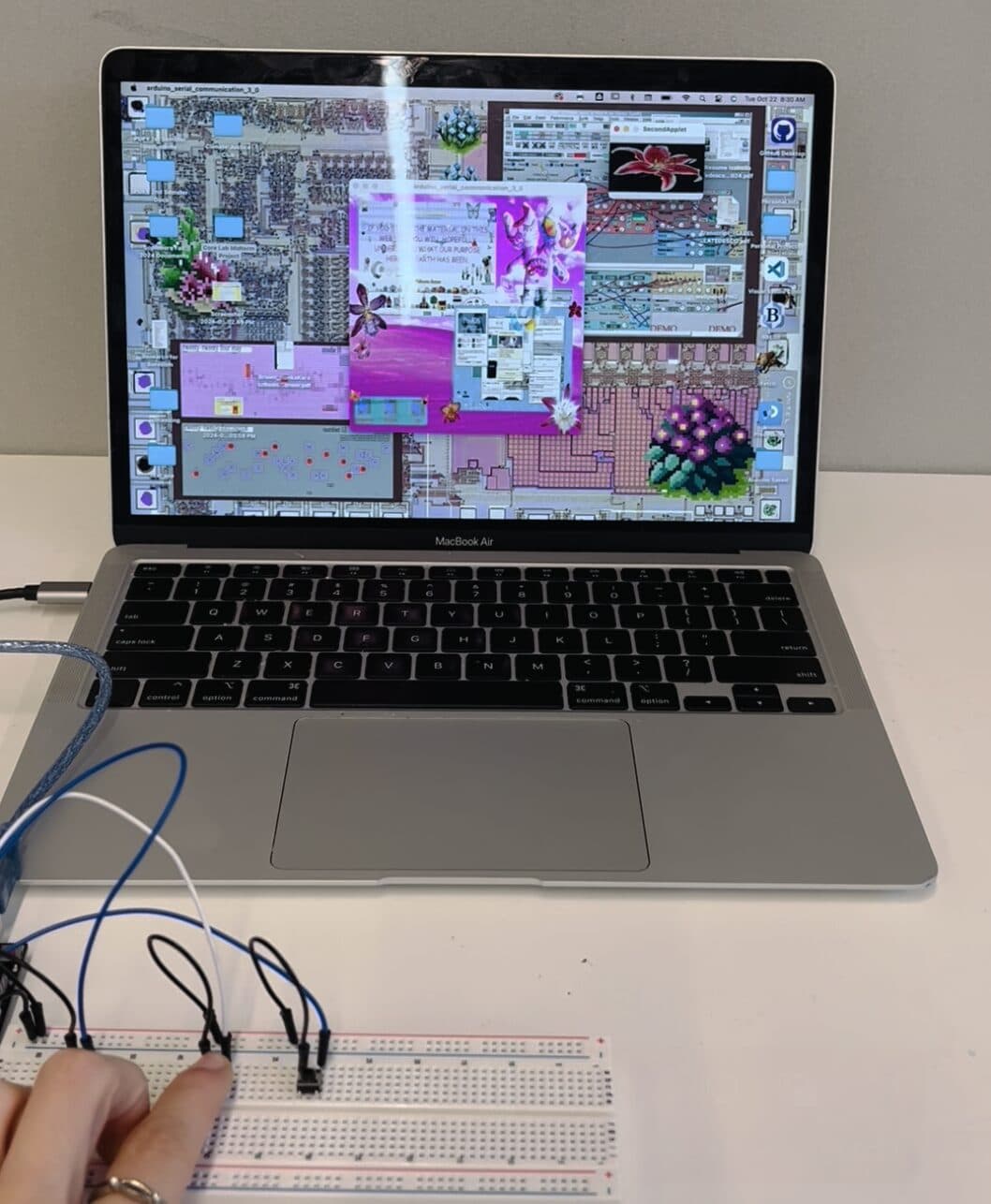
Clutter is something that has always been present in my life. Growing up, our home was full of things: holiday postcards taped to the kitchen walls, a rubber duck on the light fixture, small Goodwill figurines, traditional Chinese pottery above the fireplace, my room overflowing with art supplies I couldn't throw away because what if I need it. Clutter isn't inherently bad. But it asks to be done thoughtfully.
internet maximalism translates that personal relationship with accumulation into a screen-based installation. As the user interacts, pressing buttons, triggering inputs, popup windows multiply across the display. Each one is intentional, summoned by the visitor. But the result is still random, still unexpected. Organized chaos.
I wanted an installation that is intentional in the sense that the user purposefully triggers the popups, but still random and unplanned for them once it unfolds.
Process
Inspired by Chia's multiple webpage performances, I started by sketching out what the popup windows should look like and how the user could interact with them, before thinking about aesthetics at all. Once the mechanics were working in Processing, I turned to Pinterest and internet artists I admire to shape the visual language of the piece.
Getting the second window to open in Processing was one of the harder problems, I was still finding my footing with Java at the time. Eventually the Processing community forums helped me crack it, and once it worked, the outcome felt right.
Theme + Message
Purposely cluttering the screen is representative of the overloading and overconsumption of media we have access to because of the internet. It's something I think about a lot, especially in conversations across generations. The installation makes that consumption visible, each popup a small act of adding to the pile, mirroring the way we scroll, click, and accumulate online without always noticing.
What's Next
I want to keep exploring this popup window effect at a larger scale, more buttons, more simultaneous interactions, more people cluttering the screen together at once. There's something exciting about a version of this piece where the chaos genuinely escapes any single person's control.
Process & Design